- Whatsapp: +86 15967777035
- Email: [email protected]

When engineering procurement teams and panel builders map out the electrical architecture for heavy-duty industrial machinery, the conversation inevitably moves past standard isolation. The real battleground for system reliability and short-circuit survivability centers on a critical design fork: Should we deploy a fused disconnect switch or an automatic circuit breaker?
While basic isolation blocks power manually, a fused disconnect switch introduces high-capacity sacrificial links into the path, acting as a direct competitor to the thermal-magnetic protection curves of industrial breakers. Selecting the wrong topology can result in nuisance tripping, bloated replacement costs, or compliance failures during strict site audits. As a premier China Professional Circuit Breaker Manufacturer since 1985, Korlen breaks down the physical, operational, and financial realities of both strategies to streamline your next global procurement cycle.
To optimize a B2B bill of materials (BOM), purchasing officers must understand the mechanical and thermal differences that govern these low-voltage power components.
A fused disconnect switch combines two vital engineering elements into a single chassis: a manual, high-visibility air-gap isolation blade system complying with IEC 60947-3, and a set of internal high-rupturing capacity (HRC) fuses. When a massive short-circuit fault occurs, the internal silver elements inside the fuse barrels literally melt, opening the circuit in milliseconds.
The major drawback? It is a single-use safety shield. Once it clears a fault, the machinery experiences extended downtime until a certified technician physically sources and installs exact matching replacement fuses. For standard physical isolation without internal fuses, explore our specialized isolating switch portfolio.
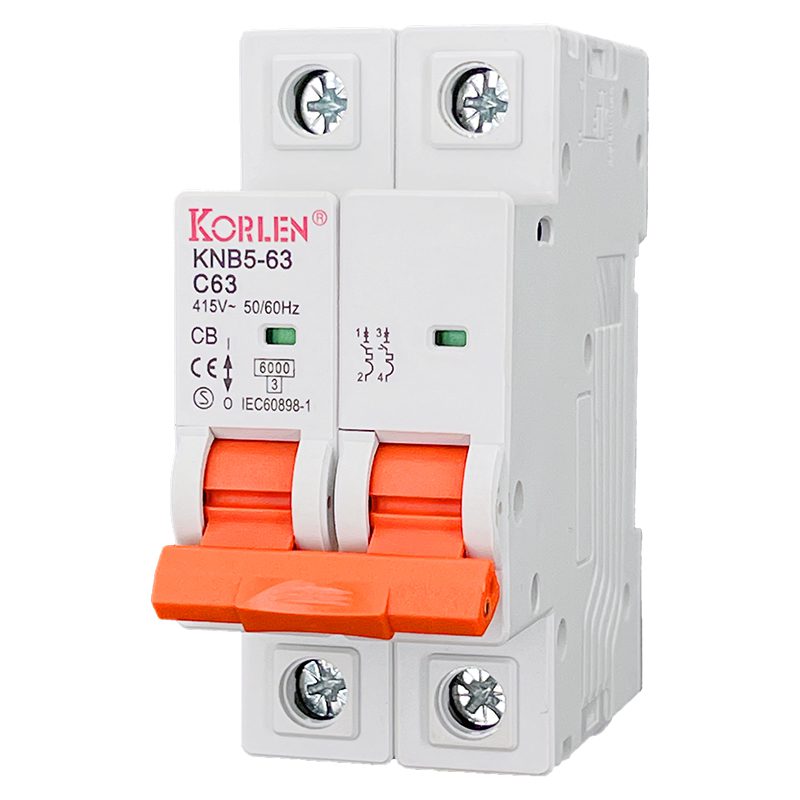
A circuit breaker is a switch that automatically interrupts overcurrents using a resettable bimetallic strip or an electromagnetic solenoid link. When a fault is cleared, nothing inside the device is destroyed. A plant operator simply clears the downstream jam and flips the breaker handle back to the “ON” position—instantly restoring factory production lines and minimizing costly operational downtime.
For versatile terminal distribution, review the performance matrix of our modular Miniature Circuit Breakers (MCB) series.
While older engineering blueprints heavily relied on fuses due to their raw clearing speed, modern manufacturing advancements have shifted the difference between switch and circuit breaker dynamics heavily in favor of intelligent resettable breakers.
Fuses feature a deceptively lower initial acquisition price. However, for international factory floors, the long-term operational costs tell a different story. Every time a fuse blows, production stops completely. If your procurement team fails to maintain a local safety stock of matching replacement fuses, the factory line faces days of logistical delays. A circuit breaker eliminates this supply chain dependency entirely through its multi-thousand trip lifecycle.
In three-phase motor applications, a fault on just one phase might blow only one fuse out of the three. This leaves the motor running on the remaining two phases—a dangerous condition known as “single-phasing.” This causes extreme thermal spikes that rapidly burn out expensive motor windings. In contrast, a modern 3-pole or 4-pole Moulded Case Circuit Breaker (MCCB) ensures absolute safety: a fault on any single phase triggers a mechanical internal cross-bar, instantly tripping all poles simultaneously to completely isolate the motor.
Fuses are completely silent, unmanaged components. Modern industrial automation demands real-time data. Circuit breakers can be equipped with auxiliary status contacts, shunt trips, and under-voltage releases that send instant digital warnings to central PLC networks or SCADA software the millisecond an overcurrent event occurs.
When cross-referencing low-voltage suppliers for international infrastructure bids, utilize this definitive technical table to benchmark your system parameters:
| Engineering Metric | Industrial Circuit Breaker (MCCB/MCB) | Heavy-Duty Fused Disconnect Switch |
|---|---|---|
| Post-Fault Recovery | Instant Manual Reset (Zero consumable parts) | Mandatory Fuse Replacement (High downtime) |
| Three-Phase Loop Safety | Simultaneous Multi-Pole Tripping (Prevents Single-Phasing) | Individual Phase Blown Risks (High motor damage risk) |
| Core Standards | IEC 60947-2 (Circuit Breakers) | IEC 60947-3 (Switches and Disconnectors) |
| Enclosure Space Efficiency | Ultra-Compact Footprint with internal trip links | Large Footprint required to house heavy fuse blocks |
In highly reliable control topologies, you don’t always have to completely eliminate one device for the other. Experienced industrial designers deploy a cascading hierarchy to maximize system uptime.
Standalone, non-fused disconnect switches are explicitly utilized at the main incoming feeder location of an enclosure to serve as the master power isolator, or directly next to field-level motors to comply with visual safety maintenance codes. This lets local technicians completely isolate a machine while keeping the rest of the facility’s power lines active.
To reduce spatial demands inside multi-station cabinets, the industry standard is shifting toward a moulded case circuit breaker with rotary handle disconnect configuration. By linking an external, door-mounted heavy-duty rotary lever directly to a rail-mounted MCCB inside, you get the absolute best of both worlds: a code-compliant, physically locked entrance disconnect switch mechanism, and resettable high-kA automatic short-circuit protection in a consolidated footprint.
Procuring your entire component network from a single, vertically integrated complete package electrical switchgear component manufacturer like Korlen eliminates specification mismatches, unifies your regulatory certifications under global frameworks, and deeply scales down administrative procurement friction.
Evaluate your industrial panel layout by checking your specific operational priorities below:
At extreme fault currents, HRC fuses can actually melt slightly faster than mechanical breaker contacts can separate. However, modern high-grade MCCBs utilize advanced current-limiting designs that narrow this gap down to milliseconds, while eliminating fuse replacement down-times.
Because if only one fuse blows during an overcurrent event, the motor continues running on two phases (single-phasing). This rapidly overheats and destroys the internal motor coils. Breakers completely prevent this by dropping all three lines at once.
A current-limiting breaker is engineered to clear a massive short-circuit fault before the fault current can even reach its first natural peak wave, significantly lowering the destructive magnetic and thermal forces applied to downstream cables.
Yes. If your industrial machinery upgrades require a higher current capacity, a fused switch demands changing out the physical fuse blocks or the entire chassis. With adjustable-trip MCCBs, technicians simply turn an integrated dial to recalibrate the overcurrent trip settings instantly.
This hybrid configuration allows an MCCB to act as a fully compliant door-interlocked panel main switch. It ensures plant operators cannot physically open the enclosure door while the power is live, combining mechanical plant safety with advanced resettable circuit protection.
Yes, provided the handle design includes integrated padlocking holes that allow operators to mechanically lock the switch blades in the wide-open position during downstream repairs.
IEC 60947-2 establishes performance metrics for automatic overcurrent interruption devices (breakers). IEC 60947-3 evaluates the manual switching capacity, physical open insulation distance, and endurance of mechanical isolators and switches.
Korlen components are engineered with high-impact, premium flame-retardant enclosures that prevent tracking and structural deformation in high-temperature settings, along with corrosion-resistant metallurgy for long-term industrial reliability.
Yes, provided the circuit breaker carries an explicit isolation stamp from the manufacturer. This certification guarantees the internal contacts open wide enough to handle unexpected lightning surges and voltage transients safely.
Partnering with a comprehensive complete package electrical switchgear component manufacturer ensures perfect physical dimension alignment, unified technical compliance certification (CE, ISO, IEC), and substantial savings on purchasing logistics and bulk component pricing.
Managing a resilient electrical supply chain requires an engineering strategy focused on maximizing plant uptime and reducing component complexity. While sacrificial fuses served their historical purpose, modern automated industrial loops demand the resettable efficiency, zero-consumable overhead, and advanced multi-phase security offered by high-performance circuit breakers.
Aligning your factory procurement with an established, high-volume industrial low voltage isolation switch supplier and circuit breaker manufacturer guarantees long-term infrastructure stability and clear financial yields.
Access direct factory-level wholesale pricing structures, fully audited IEC test certificates, and complete 2D/3D CAD blueprint drawings for your global panel production.
GAONENGGELE ELECTRICAL SHARES CO.,LTD.
Privacy Policy | SiteMap
Copyright GAONENGGELE ELECTRICAL SHARES CO.,LTD.