- Whatsapp: +86 15967777035
- Email: [email protected]

In the professional electrical industry, single-line diagrams and schematics are the universal blueprints that guide successful project execution. Reading these diagrams accurately is paramount; a single misinterpreted symbol can lead to incorrect panel assembly, severe equipment failure, or critical safety violations. For procurement professionals and engineers working on global infrastructure, the challenge is multiplied by the distinct drafting standards used across different regions—primarily the European IEC (International Electrotechnical Commission) and the American ANSI (American National Standards Institute).
As an established China Professional Circuit Breaker Manufacturer Since 1985, Korlen has spent more than four decades manufacturing low-voltage protection components that bridge the gap between design theory and field reliability. This guide decodes the technical engineering icons for fuses and circuit breakers, clarifying how these essential devices are visually represented under both international systems.
Fuses are the absolute baseline of overcurrent defense, designed to sacrifice themselves to save expensive downstream equipment. On schematic blueprints, recognizing their exact variations prevents costly sourcing errors.
The visual depiction of a fuse changes drastically depending on which international drafting standard your project follows:
IEC Standard: Represented as a simple, clean rectangle with the conducting wire line passing completely through it.
ANSI/IEEE Standard: Represented either as a distinct zigzag line (similar to a resistor but with fewer peaks) or a smooth, continuous wave line.
When reading high-performance motor control circuits or industrial power supplies, you will see minor modifiers added to these core shapes. For instance, a “Time-Delay” or slow-blow fuse symbol includes a small modifier indicating it can handle temporary inductive inrush currents.
Furthermore, when a fuse is mechanically integrated into a manual isolation device, it is represented as a Fused Disconnect Switch. This tells the installer that the housing acts as both a safe physical isolator and an overcurrent barrier.
Unlike a fuse, a circuit breaker is a switch that automatically interrupts dangerous currents and can be reset afterward. Because these devices handle diverse load capacities, their blueprint symbols include specific identifiers for size, poles, and tripping mechanisms.
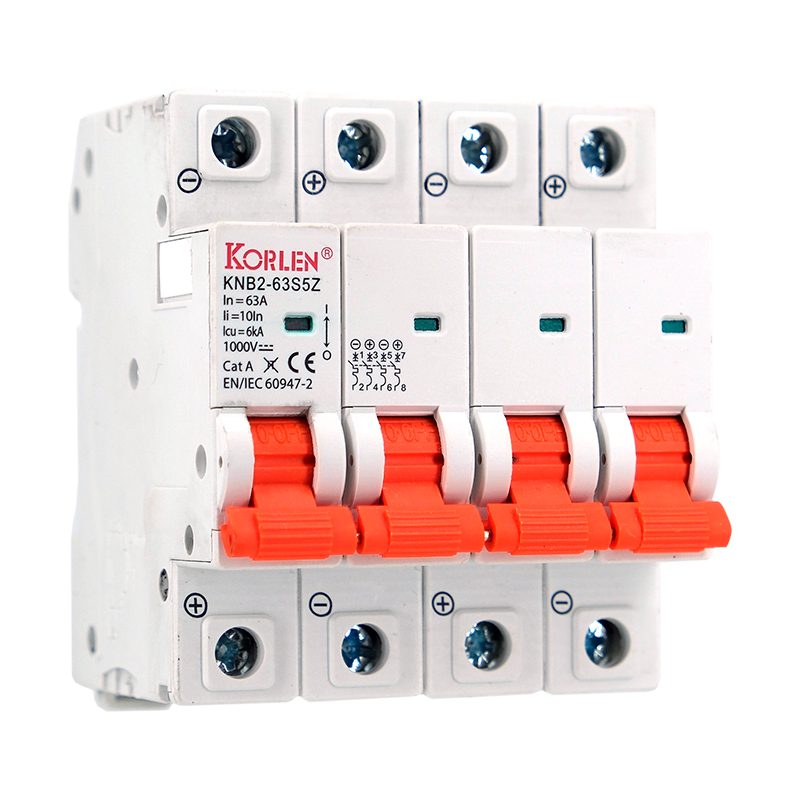
When analyzing low-voltage branch distribution layouts on a blueprint, you will frequently encounter standard single-pole or multi-pole Miniature Circuit Breakers (MCB) symbols designed to protect lighting and residential loops.
The Icon: The standard icon combines a physical switch contact indicator with a small curved arc or rectangular hook, which represents the automatic thermal-magnetic trip unit.
Multi-Pole Configurations: For multi-phase systems, standard Miniature Circuit Breakers (MCB) icons are grouped together with a dashed line, showing that if one phase trips, all poles open simultaneously.
For high-current industrial power distribution networks, the drawings scale up to utilize the Moulded Case Circuit Breaker (MCCB).
The Icon: Under both IEC and ANSI standards, an MCCB symbol looks structurally similar to an MCB but is distinguished by explicitly noted frame ratings (e.g., 250A, 400A) and micro-adjustability markings next to the switch block.
Advanced Features: Complex industrial single-line diagrams often append auxiliary contacts, alarm switches, or shunt trip coil symbols directly to the main MCCB housing graphic, alerting panel builders that the device must communicate directly with a centralized PLC system.
[IMAGE INSERTION POINT 2]: An engineering drawing excerpt showing a multi-pole circuit breaker symbol layout with auxiliary contact linkages labeled for an industrial panel build.
While standard overcurrent breakers protect infrastructure from thermal degradation, human life requires a completely different tier of sensitivity. Ground faults and current leakages are tracked via specialized residual current devices.
The differential current core inside an earth leakage protection unit is visually represented on blueprints as a small circle or toroid ring intersecting the active phase and neutral lines. This specific icon dictates the placement of a pure Residual Current Circuit Breaker (RCCB) to guarantee protection against ground faults.
The Role: On a schematic layout, a pure rccb icon signifies that the device will monitor the vector sum of currents but does not possess internal thermal-magnetic overcurrent protection. Therefore, a standard rccb circuit breaker symbol on a schematic is always paired immediately upstream or downstream with an MCB or fuse.
For modern, space-restricted panels, engineers combine the thermal-magnetic trip switch icon with the leakage loop onto a single schematic line, specifying an integrated RCBO breaker solution instead of two separate devices.
Visualizing Triple Protection: The breaker rccb style symbols explicitly show three distinct protection links tied to a single mechanical switch: a thermal element (overload), a magnetic element (short circuit), and a differential ring transformer (earth leakage).
Sourcing by Class: When reviewing rigorous project blueprints, check the accompanying text for specific classifications like circuit breaker rccb type E or alternative wave-shape indicators. These rcbo type symbols inform global procurement teams whether the circuit demands basic Type AC protection, Type A pulsating DC handling, or specialized Type B industrial sensing.
[IMAGE INSERTION POINT 3]: A structural layout comparison infographic showing the footprint difference between an MCB+RCCB paired symbol configuration versus a single integrated RCBO schematic icon.
To facilitate rapid blueprint audits for international sourcing, use this side-by-side reference table to identify standard residual current circuit breakers and overcurrent protectors.
| Component Name | IEC Standard Symbol Characteristic | ANSI / IEEE Standard Symbol Characteristic | Primary Industrial Application |
| Standard Fuse | Clean solid rectangle with line through | Sharp zigzag or continuous wave line | Sacrificial overcurrent protection |
| Miniature Circuit Breaker (MCB) | Switch contact with single square hook | Cross-mark inside a circle or break switch | Branch circuit & appliance safety |
| Molded Case Breaker (MCCB) | Switch contact with adjustable limits | Heavy break line with square frame label | High-current main distribution feeds |
| RCCB / RCD | Switch contact linked to differential circle | Balance transformer ring across lines | Dedicated personnel shock defense |
| Integrated RCBO | Combined hook and differential circle | Complex switch with dual trip modifiers | Compact, isolated circuit protection |
Q: Why do European and American electrical symbols look completely different?
The divergence stems from historical standardization pathways. Europe widely adopted the IEC system to facilitate unified cross-border industrial integration, while North American engineering historically grew around the ANSI/IEEE framework. Today, global suppliers must be proficient in both languages to service international projects smoothly.
Q: Can I replace a component drawn as a fuse with an MCB in my actual panel build?
Not without consulting the lead electrical engineer. While both handle overcurrent, their trip curves, clearing speeds, and short-circuit breaking capacities are distinct. Replacing a fast-acting fuse with a standard MCB could risk damaging sensitive downstream electronics.
Q: How do I identify a 4-pole rccb circuit breaker rccb type E or standard model on a layout?
On a blueprint, a 4-pole device will feature four parallel line paths cut through by a single, unified mechanical switching linkage line. The line marked with an “N” indicates the dedicated neutral terminal path, which is crucial for proper wiring.
Mastering the subtle variations between fuses and circuit breakers symbols ensures that your project planning translates flawlessly into robust physical infrastructure. Whether you are reviewing an international single-line blueprint specifying standard residual current circuit breakers or deploying spacesaving RCBO breaker installations, accurate symbol identification is the bedrock of system safety.
As a trusted manufacturing partner to worldwide low-voltage component suppliers, Korlen brings elite testing standards, premium raw materials, and decades of engineering expertise to your supply chain.
Bring your electrical blueprints to life with world-class hardware—Contact Us today to request comprehensive CAD/BIM model downloads, detailed technical data sheets, or a wholesale price quote!
GAONENGGELE ELECTRICAL SHARES CO.,LTD.
Privacy Policy | SiteMap
Copyright GAONENGGELE ELECTRICAL SHARES CO.,LTD.