- Whatsapp: +86 15967777035
- Email: [email protected]

Electrical distributors may encounter a difficult problem when purchasing: should you choose a traditional MCB or upgrade to an electronic circuit breaker?
So let the miniature circuit breaker manufacturer conduct a detailed analysis:miniature circuit breakers (MCB) vs electronic circuit breaker in real-world DC circuit protection scenarios.
When you’re designing or sourcing for a control cabinet, space is never “just space”… it’s cost, scalability, and flexibility.
A Miniature Circuit Breaker (MCB) typically handles one channel per module. That means if your system has multiple circuits, you’ll need multiple units.
Now compare that with an electronic circuit breaker. A single module can often manage multiple channels simultaneously.
What does that mean for you?
● Fewer components
● Cleaner wiring layout
● Smaller cabinet footprint
And if you’ve ever had to upgrade a cramped control panel… you already know how valuable that is.
Here’s where the engineering difference gets real.
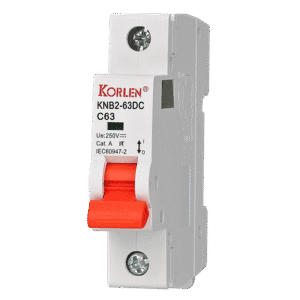
MCB relies on a thermal-magnetic tripping mechanism:
● Thermal element reacts to overload (slow)
● Magnetic element reacts to short circuits (fast, but not precise)
The downside? It’s influenced by ambient temperature. In hot environments, it may trip earlier. In cold ones, later.
An electronic circuit breaker, on the other hand, uses solid-state detection.
● Current is monitored continuously
● Trip decisions are calculated electronically
● No mechanical lag
This gives you something procurement teams rarely get from traditional devices: predictability.
So let the china miniature circuit breaker manufacturer talk about speed issues.
MCB doesn’t react instantly—it follows a tripping curve. That delay might be acceptable in AC systems, but in DC? It can be risky.
Electronic circuit breakers operate at around 1 millisecond response time.
That difference is not just technical—it’s operational.
● Faster reaction = less damage to components
● Higher accuracy = fewer nuisance trips
● Better system uptime
In high-value production lines, milliseconds matter more than you think.
This is one of the most overlooked factors during procurement.
An MCB requires a high inrush or peak current to trigger the magnetic trip mechanism.
That means your power supply must be capable of delivering significantly higher current than normal operating levels.
Electronic circuit breakers?
They don’t rely on peak current. They trip based on precise electronic thresholds.
So instead of oversizing your power supply… you design your system based on actual needs, not worst-case spikes.
Here’s where things quietly go wrong in many systems.
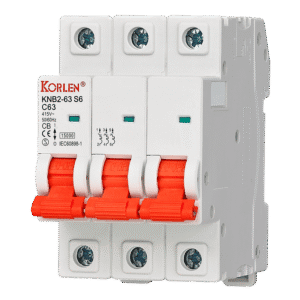
MCBs can suffer from:
● Nuisance tripping
● Inconsistent performance under varying temperatures
● Limited precision in current thresholds
Electronic circuit breakers offer:
● Adjustable trip settings
● Stable performance across conditions
● Accurate current limiting
For you as a buyer, this translates to one thing: fewer unexpected shutdowns.
This is the part many people underestimate.
MCBs were originally designed for AC systems. And AC has a natural advantage—it crosses zero voltage multiple times per second, which helps extinguish arcs.
DC doesn’t.
Once an arc forms in a DC circuit, it’s much harder to interrupt. That’s why using an MCB for DC applications can be risky unless it’s specifically rated for DC.
You’re not just choosing a breaker—you’re choosing how your system handles arc energy.
If you’re sourcing globally, standards matter. A lot.
The key one here is
IEC 60947-2 — the standard for low-voltage switchgear and controlgear.
This standard defines performance requirements for circuit breakers, including DC applications.
If a product doesn’t clearly state compliance… that’s a red flag.
You’ve probably seen these labels: B, C, Z curves.
Here’s the simplified version:
● B Curve: Trips at 3–5× rated current → residential loads
● C Curve: Trips at 5–10× → general industrial use
● Z Curve: Trips at 2–3× → sensitive electronics
For DC systems, especially with sensitive components, Z curve is often preferred.
And here’s the catch…
Many buyers don’t even check this during procurement.
Let’s say your system runs at 10A.
Sounds simple, right?
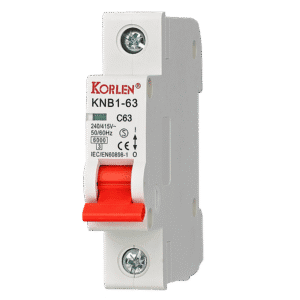
But if you’re using an MCB, your power supply might need to deliver 30A–50A peak current just to ensure proper tripping.
That’s not efficient design—that’s compensation.
And it leads to:
● Higher upfront costs
● Larger power supplies
● Reduced energy efficiency
You’ve probably seen—or experienced—something like this:
A minor fault occurs in one branch circuit… and suddenly the entire system shuts down.
Why?
Because the MCB didn’t trip selectively. Instead, upstream protection kicked in.
We worked with a packaging line integrator who faced this exact issue. A single motor fault caused full line downtime, costing hours of production.
After switching to electronic circuit breakers with channel-level protection… the problem disappeared.
That’s not theory—that’s operational reality.
Let’s be fair—miniature circuit breakers (MCB) are not obsolete.
They’re still a solid choice when:
● You’re working with AC systems
● Budget is tight
● Loads are simple and predictable
For basic protection, they do the job.
Now, if your application involves:
● DC power systems
● Automation equipment
● PLC-controlled environments
● Sensitive electronics
Then an electronic circuit breaker is often the smarter move.
You get:
● Precision
● Speed
● System-level control
Here’s the reality:
MCBs are cheaper upfront.
But cheaper doesn’t always mean lower cost.
When you factor in:
● Downtime
● System inefficiencies
● Oversized components
Electronic circuit breakers often win in total cost of ownership.
| Feature | MCB | electronic circuit breaker | Impact on Buyer |
|---|---|---|---|
| Channels | Multi-module | Multi-channel in 1 module | Space saving |
| Tripping | Thermal + Magnetic | Electronic | Faster response |
| Reaction Time | Slow | ~1 ms | System safety |
| Peak Current | Required | Not required | PSU compatibility |
| Accuracy | Low | High | Stable operation |
| Temperature Impact | High | Low | Reliability |
MCBs were not originally designed for DC systems
Electronic circuit breakers provide faster and more precise protection
Peak current requirements can limit system performance
Power supply compatibility directly impacts reliability
Space efficiency matters in modern control cabinets
If you’re making a procurement decision today, the choice between MCB vs electronic circuit breaker isn’t just about price—it’s about fit.
For traditional AC setups, buy miniature circuit breakers (MCB) still offer a reliable, cost-effective solution. But in modern DC environments—where precision, speed, and system stability are critical—electronic circuit breakers clearly provide an edge.
The real question is: are you optimizing for upfront cost… or long-term performance?
If you’re looking for dependable DC circuit protection or high-quality miniature circuit breakers MCB tailored for industrial applications, KORLEN offers solutions designed with both reliability and procurement efficiency in mind.
👉 Reach out today and find the right protection strategy for your system.
Can MCB be used in DC circuits?
Yes, but only if it is specifically rated for DC. Standard AC MCBs may not safely interrupt DC arcs.
Why do MCBs need peak current to trip?
Because their magnetic trip mechanism requires a high instantaneous current to activate.
What is a Z curve in MCBs?
It’s a tripping curve designed for sensitive equipment, triggering at lower multiples of rated current.
Are electronic circuit breakers safer?
In DC and sensitive systems, yes—they offer faster and more accurate protection.
Do I need to upgrade my power supply when using MCBs?
Possibly. You may need a higher-capacity PSU to provide the required peak current.
How does temperature affect MCB performance?
Thermal elements can cause early or delayed tripping depending on ambient temperature.
Which is better for industrial automation?
Electronic circuit breakers are generally better due to precision and multi-channel capability.
How do I choose the right circuit breaker for DC systems?
Consider response time, accuracy, power supply compatibility, and compliance with standards like IEC 60947-2.
GAONENGGELE ELECTRICAL SHARES CO.,LTD.
Privacy Policy | SiteMap
Copyright GAONENGGELE ELECTRICAL SHARES CO.,LTD.