- Whatsapp: +86 15967777035
- Email: [email protected]

Key Takeaways
Published by the Korlen Engineering Team · Motor Protection · 9 min read
Category: Motor Control
Coordination (often called “type of coordination” in IEC 60947-4-1) describes what happens to the motor starter — contactor and overload relay — after it successfully clears a short circuit. The starter did its job and tripped; the question is whether it survives.
Type 1: the protective device clears the fault and no danger results (no explosion, fire, or ejection of parts). But the contactor and/or overload relay may be damaged and must be replaced before restarting.
Type 2: the fault is cleared and the contactor and overload relay are not damaged — they can be reset and put back into service with no replacement. Contacts must not weld.
A contactor’s power contacts are mechanically opened by the trip, but a short-circuit current can be thousands of amps. If the arc is not quenched fast enough, the intense heat welds the silver-alloy contacts together. The motor then cannot be disconnected electrically — a latent hazard.
Welding is driven by two things: (1) the let-through energy the contactor sees, and (2) how quickly the upstream protective device cuts current. A coordinated design limits the energy reaching the contactor so the arc self-extinguishes before welding. That is the entire point of type 2 coordination.
| Criterion | Type 1 | Type 2 |
|---|---|---|
| Contact welding | Possible | Must not occur |
| Equipment after fault | May need replacement | Reusable, no replacement |
| Hazard during fault | None (no explosion/fire) | None |
| Downtime | Higher (replace parts) | Lower (reset & run) |
| Typical use | Non-critical / cost-led | Process / continuous duty |
Korlen’s AC contactors and thermal overload relays are engineered as a coordinated motor-control family — pair them per the coordination table for type 2 performance.
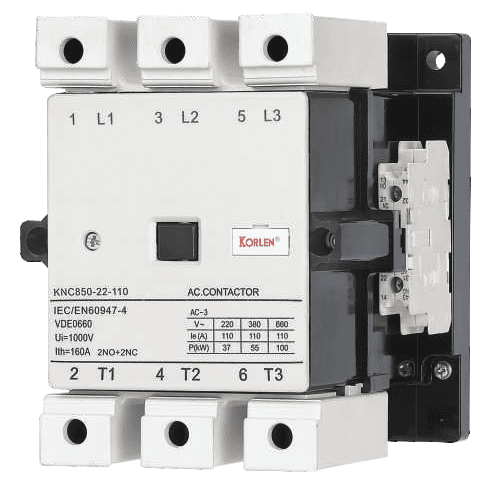
Korlen KNC8 — AC contactor for motor control
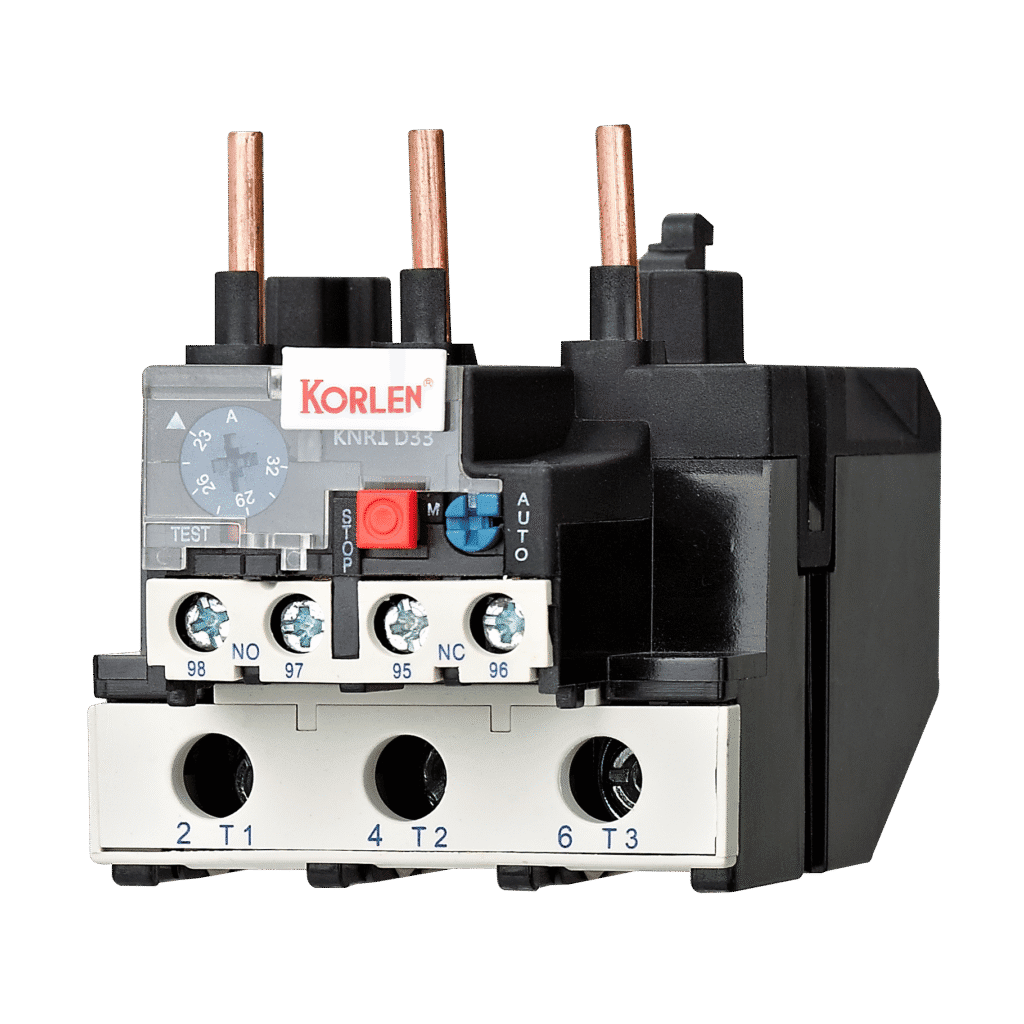
Korlen KNR1 — thermal overload relay for coordinated motor protection
| Model | Role | Link |
|---|---|---|
| KNC8 | AC contactor | View |
| KNR1 | Thermal overload relay | View |
| KNS12 | Manual motor starter | View |
No. Type 1 is acceptable where brief downtime and part replacement are tolerable and cost is the priority. Type 2 is preferred for continuous-process and critical-duty motors. See Korlen contactors.
No — it means no damage from the short-circuit event itself. Normal electrical wear from millions of operations still occurs; coordination only governs the fault case.
Only if the combination is on a verified type-2 table. Informal mixing risks contact welding. Use matched Korlen KNC8 + KNR1 for assured coordination.
A motor protective circuit breaker integrates short-circuit and overload protection and is pre-coordinated with a contactor — the fastest path to type 2. Korlen’s manual motor starter KNS12 is a self-contained option.
Find your motor FLC and prospective fault current, then read the approved contactor + overload + fuse/breaker combination. Stay within the stated short-circuit limit.
Type 1 vs Type 2 is a downtime-and-safety decision, not a checkbox. If a welded contactor would halt your line, specify type 2 with a verified, matched motor-control combination — and keep the coordination table on file.
Korlen supplies matched contactor + overload relay combinations and the coordination data for your motor rating.
© Korlen Electric. For B2B specification reference. Verify type 1/type 2 coordination against the latest IEC 60947-4-1 table and manufacturer data.
GAONENGGELE ELECTRICAL SHARES CO.,LTD.
Privacy Policy | SiteMap
Copyright GAONENGGELE ELECTRICAL SHARES CO.,LTD.