Introduction
In electrical systems, ensuring proper circuit protection is essential for the safety and efficiency of operations. For higher-power feeders, selecting the appropriate circuit breaker is critical. The two most common circuit breakers are MCCBs (Molded Case Circuit Breakers) and MCBs (Miniature Circuit Breakers). While both serve to protect electrical circuits, MCCBs are preferred in high-power applications due to their ability to handle higher currents, provide better protection, and offer more flexibility. In this blog, we will explore why MCCBs are the go-to choice for higher-power feeders over MCBs.
What Are MCCBs and MCBs?
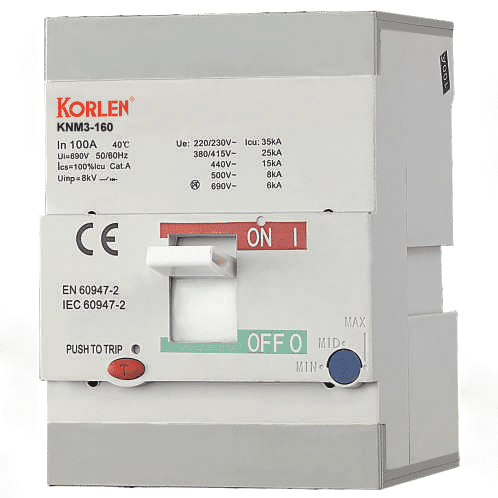
MCCB (Molded Case Circuit Breaker)
An MCCB is a type of circuit breaker designed to protect electrical circuits from overload and short circuits in industrial, commercial, and residential applications. It can handle higher current ratings (up to 2500 A) and offers adjustable settings for overload protection. MCCBs are more robust, offering a wider range of protection and are used in systems requiring protection against high current, including motors and large feeders.
- Features: Adjustable settings, high current ratings, short circuit and overload protection, thermal and magnetic protection.
- Applications: Industrial feeders, motors, large commercial equipment.
MCB (Miniature Circuit Breaker)
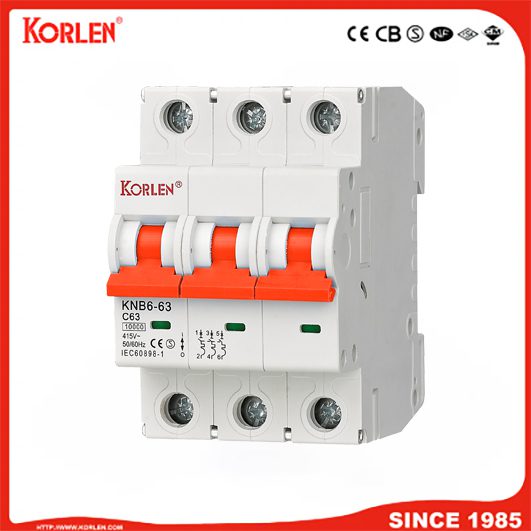
An MCB is a smaller, compact circuit breaker used for low-power applications. It is designed to provide protection against overloads and short circuits for circuits with lower current ratings (typically up to 100 A). MCBs are mostly used in residential or light commercial applications, where the electrical load is relatively small.
- Features: Fixed settings, compact design, short circuit and overload protection.
- Applications: Residential circuits, low-power commercial circuits, and small machinery.
Why MCCB Is Preferred for Higher-Power Feeders
MCCBs are specifically designed to protect high-power feeders due to their higher current and voltage ratings. Below are some key reasons why MCCBs are preferred for high-power applications:
- Higher Current Ratings MCCBs can handle much higher current ratings than MCBs. They are available in ratings that go up to 2500 A, while MCBs typically max out at around 100 A. For industrial feeders that require high power distribution, MCCBs are essential to prevent overheating or damage from excessive current.
- Adjustable Overload Protection MCCBs offer adjustable overload settings, which makes them ideal for industrial applications where the current can fluctuate. This feature allows for customized protection based on the specific needs of the system. MCBs, on the other hand, come with fixed settings that might not provide the flexibility required for higher-power systems.
- Better Short-Circuit Protection MCCBs are designed to offer more advanced short-circuit protection, which is critical in higher-power applications. They are equipped with both thermal and magnetic protection, allowing for faster disconnection in case of a short circuit. MCBs, while offering short-circuit protection, are not as robust or quick to react in high-current situations.
- Versatility in Industrial Applications MCCBs can be used for various industrial purposes, such as motor protection, high-current feeders, and machinery protection. They are available in a range of voltage ratings, making them suitable for various industrial environments, while MCBs are generally limited to lower voltages and currents.
Key Differences Between MCCB and MCB
|
Feature
|
MCCB (Molded Case Circuit Breaker)
|
MCB (Miniature Circuit Breaker)
|
|
Current Rating
|
Up to 2500 A
|
Up to 100 A
|
|
Overload Protection
|
Adjustable overload settings
|
Fixed overload settings
|
|
Short Circuit Protection
|
Advanced protection with thermal and magnetic settings
|
Basic protection
|
|
Applications
|
Industrial feeders, motor protection, high-power systems
|
Residential circuits, small commercial equipment
|
|
Voltage Rating
|
Higher voltage ratings, suitable for industrial use
|
Lower voltage ratings, suitable for residential use
|
|
Size and Design
|
Larger, more robust design
|
Compact, smaller design
|
Applications of MCCB in Higher-Power Feeders
MCCBs are used extensively in high-power applications where reliable protection is crucial. Common applications include:
- Industrial Feeders: MCCBs are used to protect high-current feeders in factories, large commercial buildings, and power plants. These systems carry significant amounts of electricity, and MCCBs are designed to handle such loads safely.
- Motor Protection: MCCBs are ideal for protecting large motors from overloads and short circuits. Motors draw high current, and MCCBs help prevent costly damage by ensuring the system is promptly disconnected in case of a fault.
- Power Distribution Systems: In power distribution networks, MCCBs provide essential protection for transformers, switchgear, and other equipment that carry high voltage and current.
Why MCB Is Not Suitable for Higher-Power Feeders
MCBs are designed for smaller electrical systems and are not equipped to handle the higher current demands of higher-power feeders. Here are some reasons why MCBs are not suitable:
- Limited Current Handling Capacity: MCBs are generally limited to current ratings of 100 A or less, making them unsuitable for systems with high power requirements.
- Lack of Adjustable Settings: The fixed settings of MCBs mean that they cannot be tailored to specific applications, which is often necessary in higher-power scenarios.
- Slower Tripping Mechanism: MCBs are not as quick to react to short circuits in high-power systems, making them less effective in protecting large equipment and feeders.
How to Choose the Right Circuit Breaker for Your Feeder
Choosing between an MCB and MCCB for your electrical feeder depends on several factors:
- Current Rating: If your feeder system requires high current, MCCBs are the better choice. For lower power systems, MCBs are sufficient.
- Type of Protection: For customizable overload and short-circuit protection, MCCBs offer more versatility. MCBs are simpler but less flexible.
- Application Needs: Consider whether the system requires protection for industrial machinery, motors, or power distribution—MCCBs are more suitable for these higher-power applications.
Why Choose Korlen’s MCCBs?
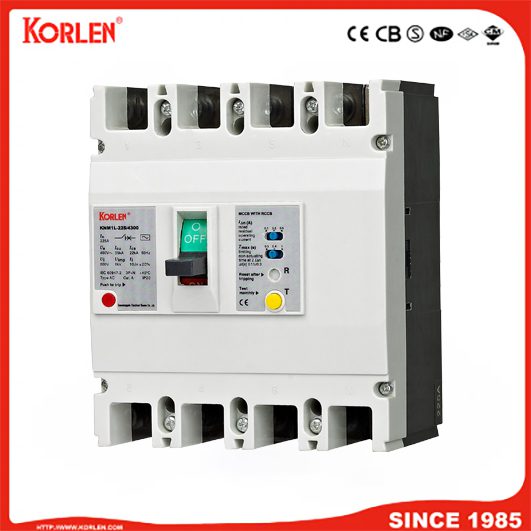
At Korlen, we provide reliable MCCBs that offer superior protection for industrial applications. With adjustable settings, high current handling capacity, and robust protection mechanisms, our MCCBs are built to ensure safety and efficiency in your electrical systems. Choose Korlen for optimal protection in high-power feeders.
FAQs
Q:Why can’t MCBs be used in high-power feeders?
MCBs cannot handle high current ratings, making them unsuitable for industrial feeders that require protection for large electrical loads.
Q:What is the maximum current rating of an MCB?
An MCB typically has a maximum current rating of 100 A, which is suitable for smaller circuits.
Q:Can MCCBs be used for residential applications?
While MCBs are more common in residential settings, MCCBs can be used for larger homes or buildings with higher power demands.
Q:What are the advantages of MCCBs over MCBs?
MCCBs offer adjustable overload protection, higher current handling capacity, and better short-circuit protection, making them ideal for industrial and high-power applications.
Conclusion
When it comes to protecting higher-power feeders, MCCBs are the preferred choice due to their ability to handle large currents and provide adjustable, customizable protection. Korlen offers a wide range of high-quality MCCBs designed for industrial feeders and motor protection, providing reliable safety for your high-power systems.